What shapes lift selection in Sacramento
- Building stock: Many tasks occur in finished interiors, atriums, and facility corridors where floor loads, doorway width, and turning radius limit machine size. Electric scissor and vertical mast platforms are commonly evaluated for these spaces.
- Industrial demand: Local distribution buildings favor high-cycle indoor lifts with non-marking tires and long runtimes for racking, lighting, and inventory work.
- Climate: Regional heat can stress batteries and electronics; winter fog reduces visibility outdoors. Equipment choices often weigh duty cycles, charging windows, and the need for enhanced lighting.
Core categories we compare
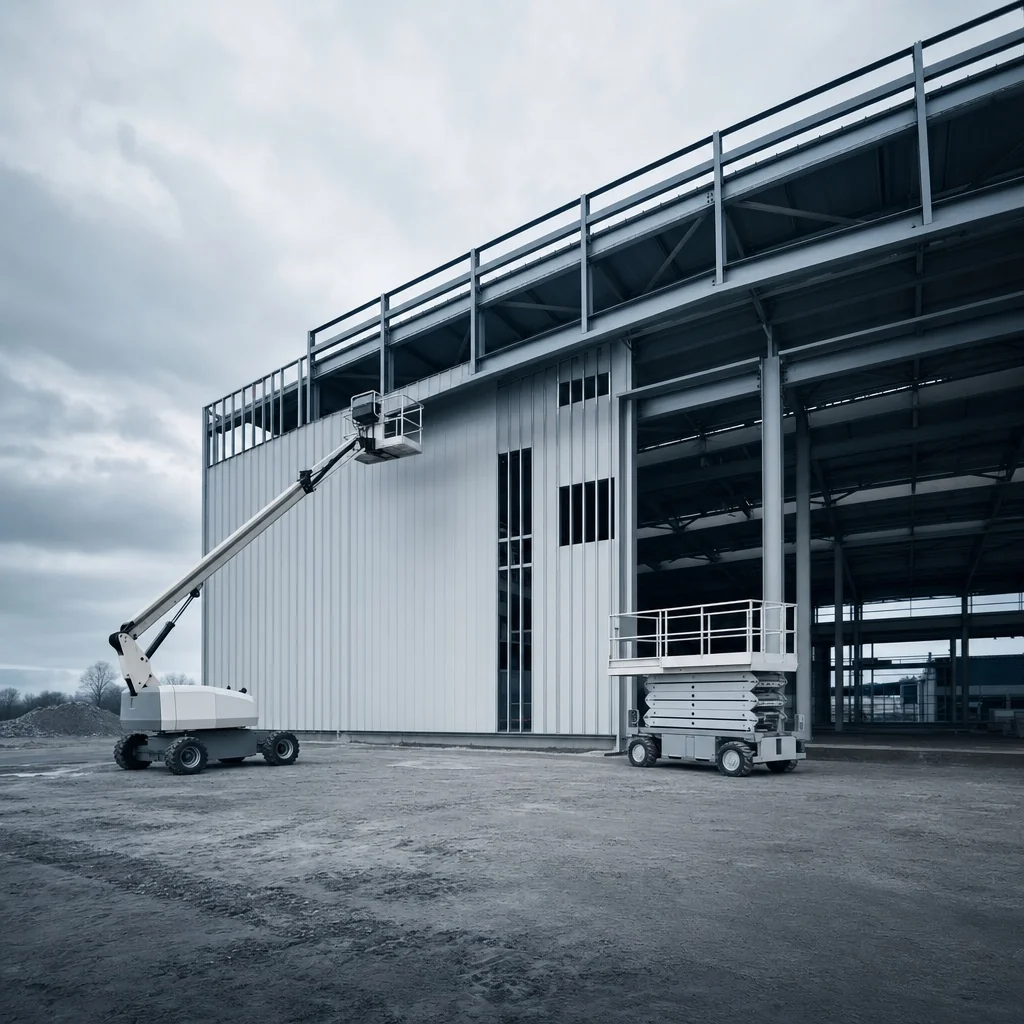
- Electric scissor lifts: Best considered where slab floors, aisle width, and overhead clearance are known. See /electric-scissor-lift-rental/ for height ranges, platform sizes, and aisle constraints common to Sacramento interiors.
- Rough‑terrain scissor lifts: Evaluated when grade, soft soil, or construction debris are present. Local winter fog and variable ground conditions make tire type, drive system, and lighting relevant. Explore /rough-terrain-scissor-lift-rental/.
- Boom lifts (articulating and telescopic): Selected when the machine cannot sit directly under the work or must reach over landscaping and utilities. Compare options at /boom-lift-rental/, /articulating-boom-lift-rental/, and /telescopic-boom-lift-rental/.
- Vertical mast lifts: Fit for narrow indoor approaches, elevator cabs, and finished floors where minimal point loading is preferred. Details at /vertical-mast-lift-rental/.
How local conditions change planning
- Access patterns: Historic buildings and tree-lined streets often restrict truck staging and turning space. That influences platform size and whether a knuckle boom is more practical than a straight boom.
- Surface readiness: New industrial sites may offer compacted base rather than finished slab, pushing the decision toward rough‑terrain scissor or boom units until paving is complete.
- Visibility and lighting: Outdoor work during foggy mornings benefits from machines with strong work lights and controls readable in low contrast.
Related site resources
For supporting equipment and perimeter planning, see /generators-light-towers-rental/, /temporary-fencing-barricades-rental/, and /storage-containers-rental/. Broader categories live at /products/.
How to reach us
Discuss project constraints, measurements, and timelines at (916) 274-7389 or through /contact/.