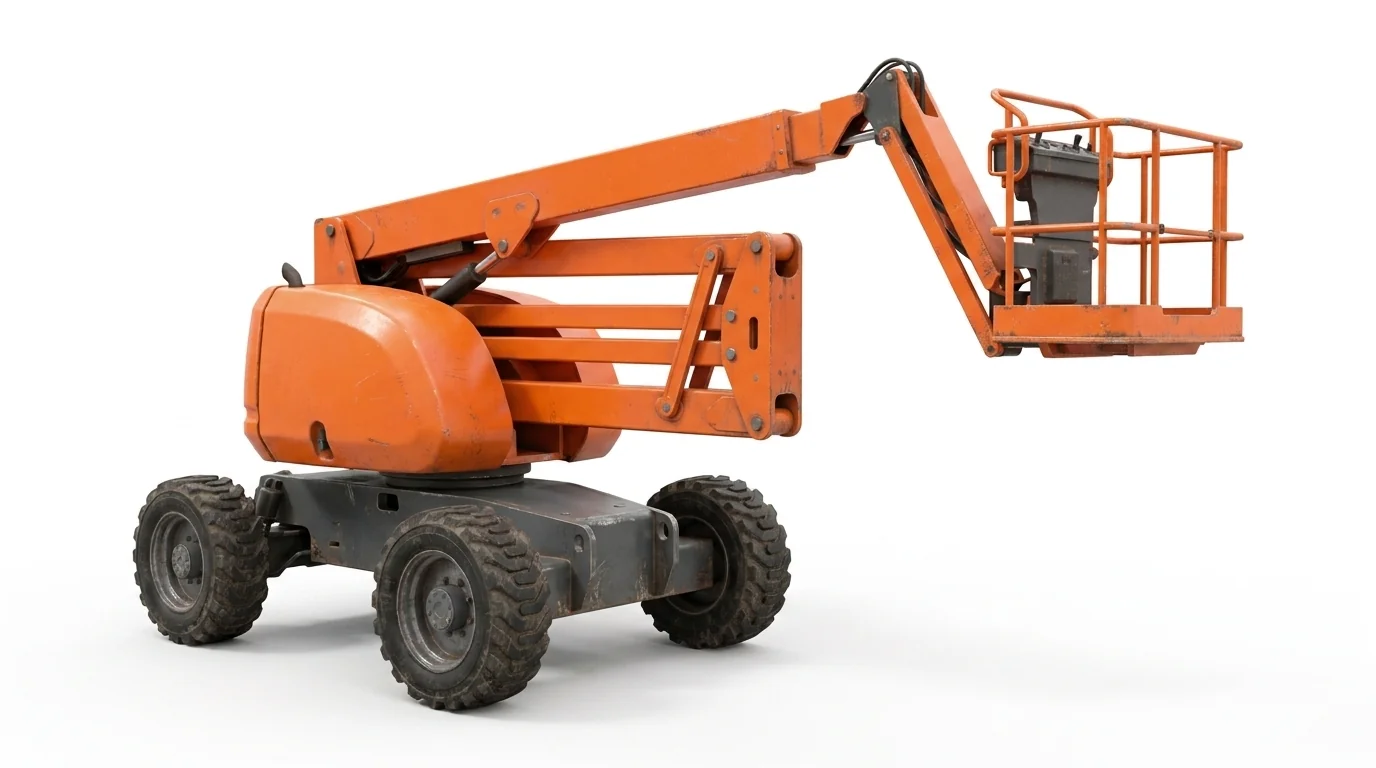
Articulating booms solve the problem of reaching over obstacles where the machine cannot sit directly below the task. In Sacramento, the mix of government buildings, urban forestry tasks, and busy service courts puts a premium on horizontal outreach and precise positioning in tight courtyards or alleys.
Start with the job geometry
Can the machine sit below the task, or is something in the way? If roofs, signage, or tree limbs block a straight path, an articulating boom’s multiple joints matter.
How far out and then up? Articulation lets the platform go up-and-over, then tuck close to façades for maintenance on soffits, lighting, and glazing.
Will the work zone move frequently? Compact chassis and zero-tail or short-tail designs reduce swing conflicts along sidewalks and narrow service lanes.
Sacramento conditions that change the comparison
Heat: The regional climate pushes electronics and batteries. For indoor or shaded courtyard work, prioritize units specified for high-temperature duty cycles.
Winter fog: Low visibility on exterior routes increases the value of platforms with strong task lighting and clear ground-spotting features. Actual conditions, the selected unit’s instructions, and site procedures govern exterior or elevated work.
Urban forestry: Tree canopies along streets and campuses favor booms with extra articulation to snake through branches without needing a straight vertical approach.
Surface and power considerations
Interior floors: For atriums and galleries with finished surfaces, electric articulating booms with non-marking tires keep weight distribution lower and emissions-free. See also /vertical-mast-lift-rental/ for tighter indoor spots.
Mixed surfaces: For courtyards transitioning from concrete to compacted soil, rough-terrain articulating booms handle minor irregularities. Compare with /rough-terrain-scissor-lift-rental/ when the path is mostly vertical with broader platforms.
Reach vs. footprint: If the obstacle is close but the target height is moderate, articulation outperforms a straight boom. If you need long, unobstructed reach, see /telescopic-boom-lift-rental/.
Clearance and approach
Gate and alley width: Measure pinch points on historic service routes before committing to a platform size.
Overhead hazards: Map utilities and signage height so the boom can articulate under, then up-and-over without contacting objects.
Setback distances: In downtown courtyards, record how far the machine must stand off from façades or planters; this determines needed horizontal articulation.
Related planning links
Compare categories at /boom-lift-rental/ and /aerial-lift-rental/.
For pure vertical indoor work, see /electric-scissor-lift-rental/.
Equipment questions
Questions about Sacramento planning
When is an articulating boom better than a straight boom in Sacramento?
When obstacles like canopies, tree limbs, or parapets block a straight path to the work edge. Articulation lets the platform go out, up, and back toward the target—useful in courtyards, along treed streets, and around utilities common to local facilities.
What matters for articulating booms during winter Tule fog?
Low visibility raises the importance of task lighting, ground guidance, and clear communication zones. Planning should consider fog windows, reflective markings, and site procedures, along with the unit’s instructions for exterior operation.
Can an electric articulating boom handle Sacramento summer heat indoors?
Yes when the model is specified for high-temperature duty cycles and the duty pattern allows battery recovery. Heat can shorten run time and stress electronics, so capacity, charge planning, and ventilation are part of the selection discussion.