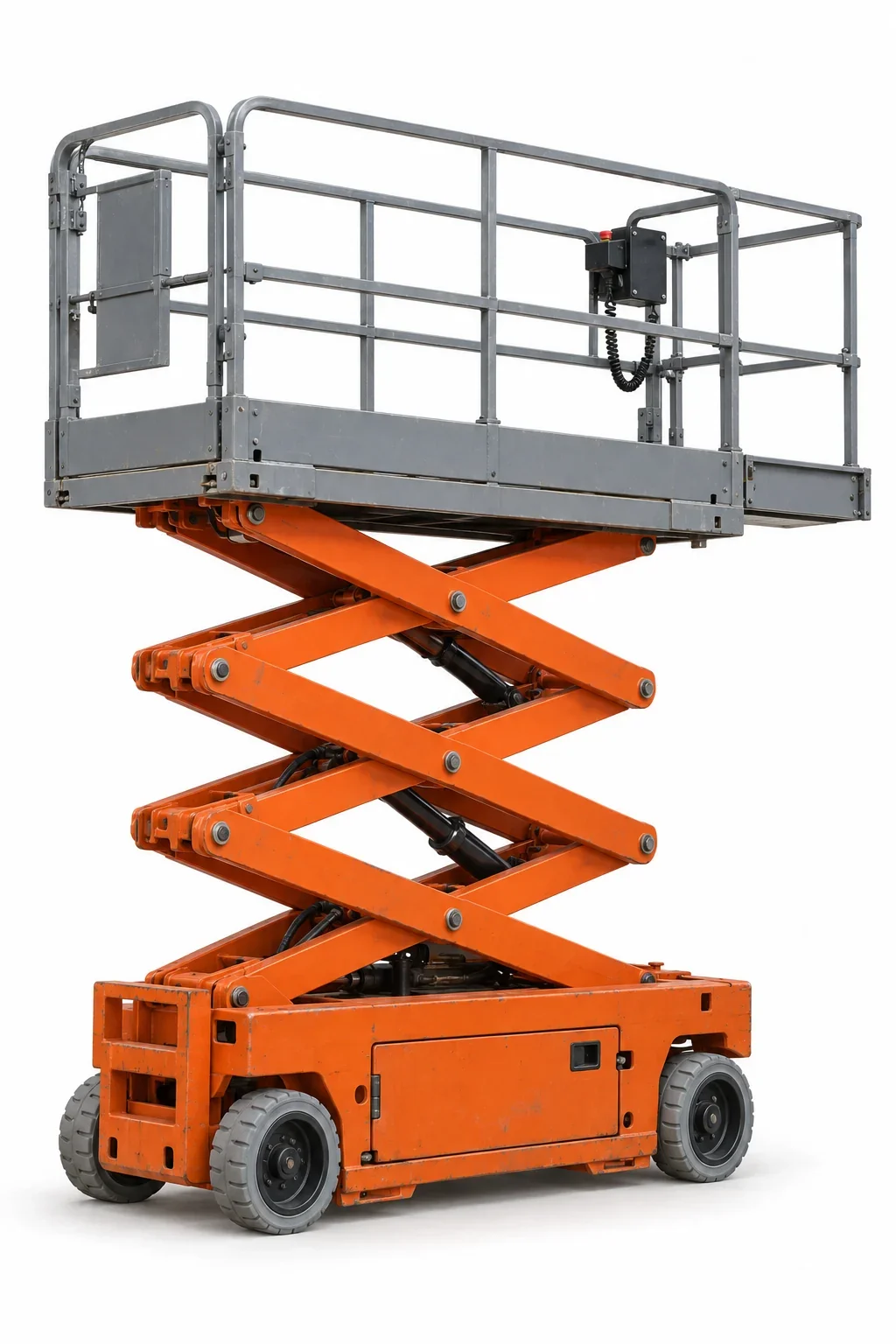
Ground truth first: can the machine get there?
- Surface type: gravel, compacted soil, and transitions at trench patches favor rough‑terrain models.
- Approach and grade: curb cuts, ramps, and swales influence required ground clearance and stability features.
- Deck size: wider platforms support multi-person tasks common on exterior envelopes, but confirm access width at gates and staging lanes.
Sacramento weather and timing
- Summer heat can affect hydraulic and electronic performance during mid‑day exposure. Staging shade and planned breaks are typical site controls; the selected unit’s instructions and site procedures govern.
- Winter Tule fog reduces visibility at dawn. Machines with strong lighting and clear marking improve ground awareness; proceed per local jobsite policies.
When a rough‑terrain scissor is ideal
- Straight‑up tasks on building skins where the machine can sit close to the wall.
- Utility runs and canopy work at retail pads with uneven approaches.
- Urban forestry staging where a broad deck supports tools for limb or hardware handling directly overhead.
When to compare a boom instead
If landscaping, fencing, or setbacks keep the machine from sitting under the task, vertical travel alone won’t reach. Review /boom-lift-rental/ for articulating models that navigate up‑and‑over paths, or /aerial-lift-rental/ for a full category overview.
Regional access patterns
Projects often rotate between central jobsites and nearby communities such as industrial areas and suburban corridors. Gate widths and shared drives can be the tightest constraint—measure those before committing to platform size.